
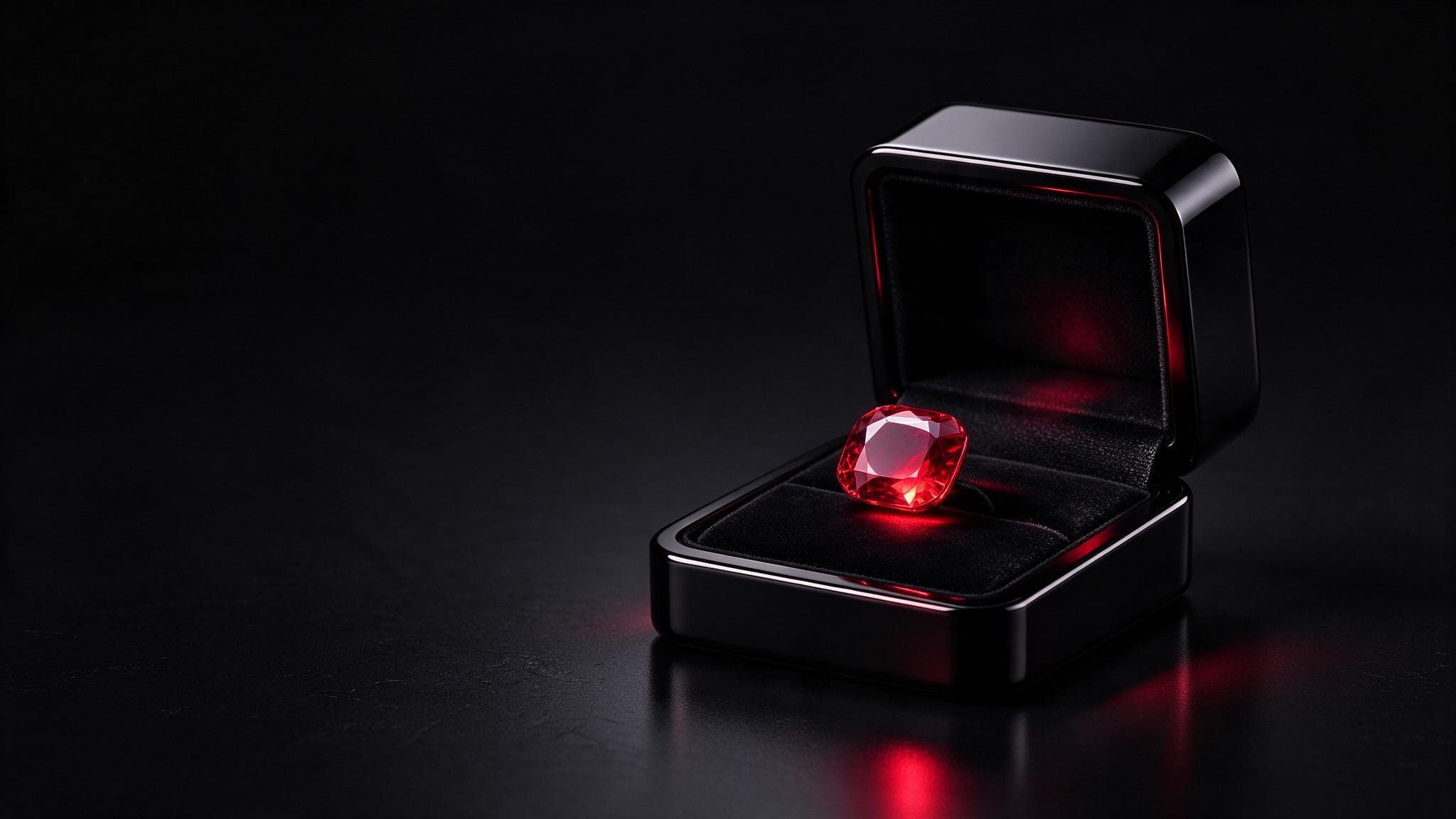
How should jewelry and accessories brands approach digital marketing?
Digital marketing for jewelry and accessories starts with visuals that show the piece up close and at real scale. Meta and TikTok drive discovery, Google Shopping captures existing demand, and email brings customers back. Underneath sits a product feed with material filled in correctly and a calendar built around gifting seasons.
What sets jewelry apart is that shoppers decide without holding the product, and a large share of purchases are gifts. Those two facts shape every decision, from ad creative and delivery times to return policy and campaign timing.
What makes jewelry ecommerce different from other categories?
Three differences stand out. The first is trust: with gold or silver, shoppers want to know the purity, the weight and whether the stone is real. The second is scale: a pendant that looks large in a photo and turns out small in the hand comes back as a return. The third is the price range: one brand can sell fashion jewelry for a few hundred lira next to gold pieces worth tens of thousands, and the ad economics of those two groups have nothing in common.
Brands using precious metals have a fourth issue: when raw material prices move, site prices move too. If your feed updates once a day, the price in the ad and the price on the site can drift apart and products may be disapproved. For items with frequently changing prices, update the feed more often.
What does each ad channel do for a jewelry brand?
| Channel | Role | What to watch in jewelry |
|---|---|---|
| Meta (Instagram, Facebook) | Discovery and retargeting | Video and carousel creative showing the piece worn |
| Google Shopping and Performance Max | Capturing demand like "silver necklace" | Material, color and a clear title in the feed |
| Google Search | Brand and high-intent searches | Gift and personalized product searches |
| TikTok | Discovery with younger audiences | Styling videos, fast creative refresh |
| Inspiration and long-tail discovery | More relevant for wedding and decor-adjacent items | |
| Email and SMS | Repeat sales and seasonal reminders | Occasion reminders, consent rules in Turkey (İYS) |
For a new brand, the usual starting point is Meta plus Google Shopping. Meta creates demand; Google captures the part of it that turns into searches. Add TikTok and Pinterest when you have the creative capacity to feed them.
How do you prepare a Google Shopping feed for jewelry?
Google's help page on the material attribute recommends submitting both material and color for precious metals, and uses a 14K white gold ring as an example. For products that vary by material, the attribute is required. A title structure that works: product type, material and purity, stone, color, then brand if relevant. For example, "925 Sterling Silver Cubic Zirconia Teardrop Necklace, Rose".
Handmade or personalized pieces usually have no GTIN. Google recommends submitting identifier_exists as "no" for such products, but don't use it if the item does have an identifier, or you'll get a warning. We cover the wider feed setup in our product feed optimization guide for Performance Max.
Which images and videos work in jewelry ads?
In jewelry, visuals are nearly the whole product page and the whole ad. Three kinds belong together:
- Product on a plain or white background: for the Google Shopping main image and catalog ads.
- Worn, at real scale: on the neck, wrist or finger. This image prevents a big share of returns.
- Short video: the stone catching light, the chain moving, the clasp opening. On Meta and TikTok this is the format with the most stopping power.
Keep true color in macro shots; rose gold that's been over-edited and looks different in hand leads to returns and bad reviews. For a shooting setup, see our guide on how to shoot ecommerce product photos that sell.
How do you plan around gifting seasons?
Jewelry sales pile up around specific dates: Valentine's Day (14 February), Mother's Day (the second Sunday of May in Turkey), Black Friday season and New Year. Plan backwards from each one the same way:
- Set the last shipping date. A gift only sells if it arrives on time. Add production time for personalized pieces.
- Have creative ready four weeks out. Seasonal ads concentrate in the last two weeks; creative must be done by then.
- Speak to gift buyers separately. "Treat yourself" and "get it for her" are different ads. Gift boxes, note cards and easy exchanges speak to the second group.
- Raise budget gradually before the season. A sudden spike in the final days can push campaigns back into learning.
- Change the message after the shipping cutoff. If you offer gift cards or in-store pickup, push those in the final days.
- Move new customers into an email flow afterwards. Someone who bought a gift is a likely buyer for the next occasion.
How do you work out an ad budget for a jewelry brand?
Average order value and margin set the budget. An example (example): with an average order of 2,000 TL and a 40% contribution margin before ads, the most you can spend on ads per order is 800 TL, so break-even ROAS is 2.5. In the same brand's 400 TL fashion jewelry range, that ceiling drops to 160 TL. That's why running precious metal and fashion jewelry in the same campaign with one target ROAS is usually a mistake; the cheaper range eats the budget and the expensive range gets no visibility.
How do you build trust online?
Research from Northwestern University's Spiegel Research Center found that reviews lift conversion far more on higher-priced products than on cheaper ones. Jewelry sits squarely in that group. Photo reviews, clearly stated material and purity, certificates where they exist, plain return and exchange terms, and secure payment with installment options should all be visible on the first screen of the product page. A size chart and an image showing chain lengths on a person answer the "how will this look on me?" question.
Where should you start?
Fix tracking and the feed first, make creative production steady second, and grow budget last. Brands that reverse this order usually end up with high spend and thin profit. We explain that sequence in detail on our performance marketing service page, where we run Meta and Google together. If you'd like to review your channel and budget split together, you can request a free growth audit.
Key takeaways
- Visuals sell jewelry: use plain-background product shots, worn shots at real scale and short video together.
- Meta and TikTok drive discovery, Google Shopping captures demand and email drives repeat purchases.
- In the feed, submit material and color for precious metals and use identifier_exists correctly for handmade pieces.
- Plan gifting seasons backwards from the last shipping date.
- Run precious metal and fashion jewelry ranges in separate campaigns with separate targets.